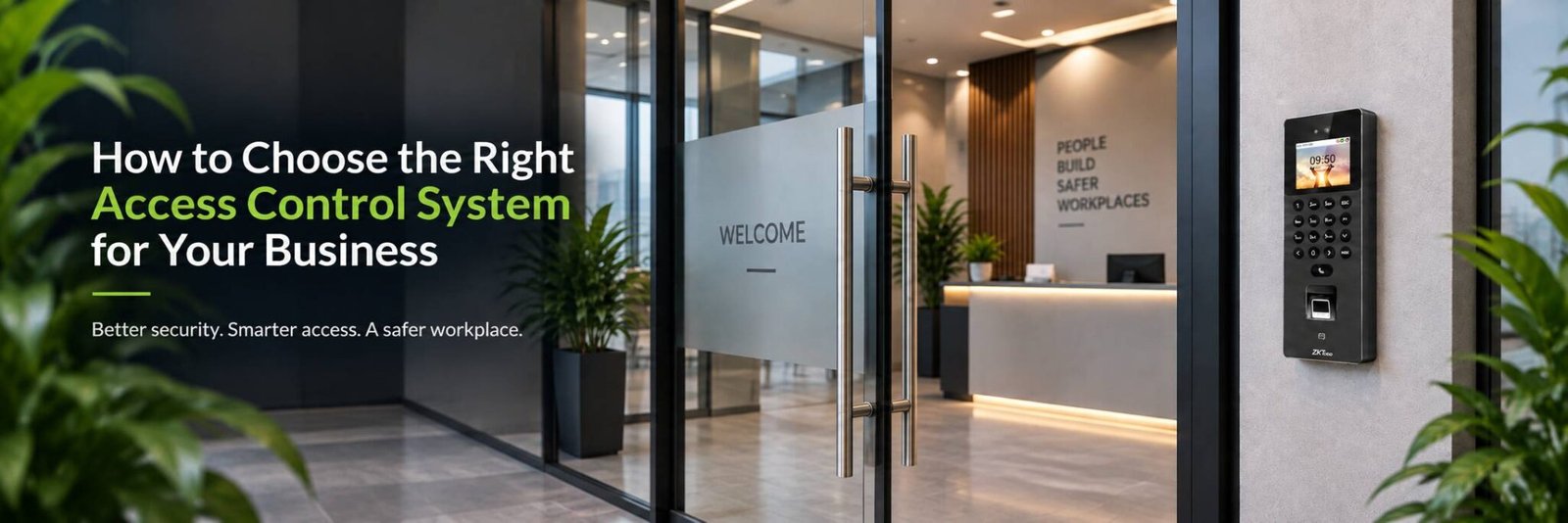
A key and lock may be enough for a small room, but managing access becomes more complicated when you have dozens or hundreds of employees using the same building, Think about an office with different departments. Not everyone needs access to every room. The accounts team may need access to their office, the IT team may need access to the server room, and visitors certainly shouldn’t be able to walk into restricted areas.
This is where an access control system becomes useful, Instead of giving everyone a physical key, businesses can decide who is allowed to enter a particular door and, in many cases, when they are allowed to enter.
But choosing an access control system is not simply a matter of buying a biometric reader. There are several things to consider before deciding what will work for your building.
Look at your doors first
Before choosing the access control device, look at the doors you want to secure, Is it a glass door? A wooden door? A metal door? Does it open inwards or outwards? Is there already an electric lock installed? These details matter because the access-control reader is only one part of the installation, You may also need an access controller, electric lock, exit button, door sensor, power supply and other hardware depending on the type of door, A professional site assessment can prevent compatibility problems later.
How should employees authenticate?
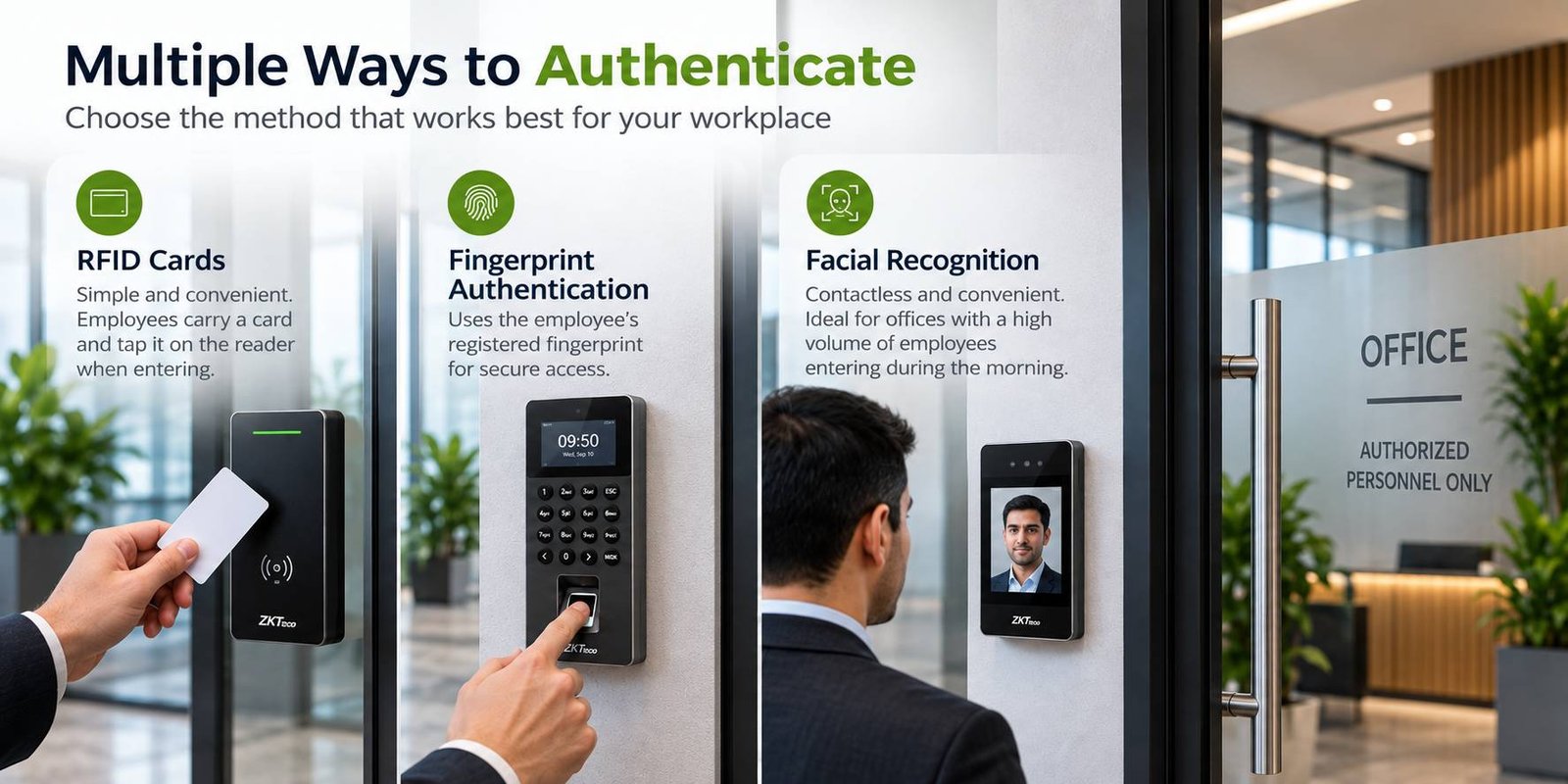
There are several options available, RFID cards are one of the simplest. Employees carry a card and tap it on the reader when entering, Fingerprint authentication uses the employee’s registered fingerprint, Facial recognition works without physical contact and can be convenient for offices with a high volume of employees entering during the morning.
Some systems can support more than one authentication method, giving the organization additional flexibility, The right choice depends on how your employees use the premises and the level of security required.
Not every door needs the same security
This is an important point, You probably don’t need the same level of security for every door in an office, The main entrance might use RFID or facial recognition. A server room may require biometric authentication. A storage area may only need access for a small group of employees, Instead of installing the most expensive system everywhere, businesses can design the access control setup according to the importance of each area, This often gives better security while keeping the overall project within budget.
Access permissions are where the system becomes useful
Imagine an employee joins the company, With a traditional key system, someone has to provide the employee with a key or access card. If the employee leaves, the key needs to be collected, With an electronic access control system, the administrator can simply create or deactivate the user’s access, The same applies when an employee changes departments, Access can be assigned according to the person’s role, department or location. Some systems can also restrict access to particular timings, For example, an employee may be allowed to enter between 8 AM and 8 PM but not outside those hours.
Don't forget visitors
Employee access is only one side of building security, Visitors, contractors and temporary workers also need to be considered, Depending on the business, visitor management can be combined with access control so that temporary visitors do not receive unrestricted access to the premises, This becomes especially useful for corporate offices, manufacturing facilities, educational institutions and buildings where sensitive areas need to remain restricted.
What happens when the power or network goes down?
This is a practical question that should always be asked before installation, Access-control systems depend on different combinations of power, networking and controllers. The exact behavior during a power or network failure depends on the equipment and how the system has been configured.
For an important entrance, you should discuss backup power and emergency exit arrangements with the installer, Security should never come at the expense of safe emergency evacuation.
Can access control and attendance work together?
Yes, and this can be useful for businesses that want to manage both security and employee attendance, An employee may use a biometric terminal to enter the workplace, while the same ecosystem can provide attendance information to HR, However, businesses should decide whether the entry transaction should automatically be treated as an attendance punch. In some workplaces, the two systems have different purposes and policies, This is another reason to discuss the complete requirement before installation rather than purchasing individual devices without a plan.
What about multiple offices?
A business with one office can usually manage a relatively simple system, But suppose the company has offices in Bengaluru, Mysuru and Chennai, The administrator may want to manage users and access permissions centrally rather than maintaining three completely separate systems, A networked access-control setup can make this easier, provided the selected controllers and software support the required architecture, This is particularly useful for organizations that expect to open additional branches in the future.
Cost is not the only consideration
When comparing access-control systems, businesses often compare the price of the reader, That’s understandable, but the reader is only one component.
The total project cost can include:
- Readers or biometric terminals
- Controllers
- Locks
- Exit buttons
- Door sensors
- Power supplies
- Cabling
- Software
- Installation
- Configuration
- Maintenance
A proper quotation should therefore describe the complete system rather than just the price of the biometric device.
Choosing an installer matters
Even good access-control hardware can perform poorly if it is installed incorrectly, Door alignment, lock selection, wiring, network configuration and emergency-release arrangements all need to be considered, The installer should also explain how administrators can add users, change permissions and check access records after the system is handed over, For businesses, this ongoing usability is just as important as the initial installation.
A good access control system should grow with your business
If you currently have two doors but expect to expand to ten, tell your solution provider before the system is designed, Planning for expansion can make future additions much easier, The same applies to employee numbers. A system selected for a small office may not be the right choice for a growing organization, Biometric Access India offers access-control solutions covering biometric, RFID and other authentication technologies, along with related security and attendance solutions, The best access control system is not necessarily the one with the most features. It is the one that provides the appropriate level of security, works reliably with your doors and employees, and can be managed easily by your team, Taking the time to understand those requirements before buying can save both money and frustration later.